If you’re running your own social media, or managing it for clients, you’ve probably heard some version of the same advice for years now. Show up every day. Post on every platform. Stay consistent. Feed the algorithm. Just keep going.
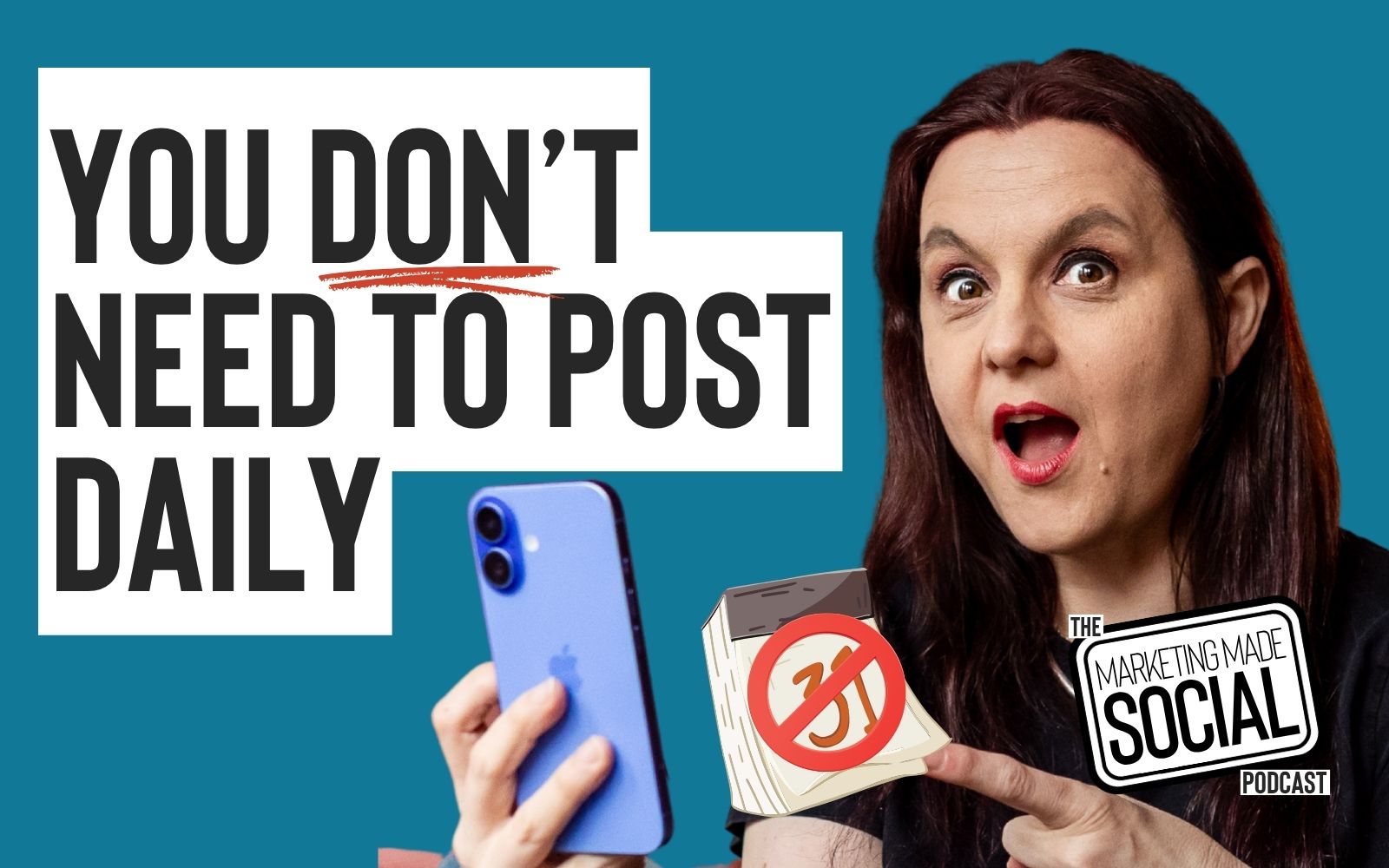
Here’s the problem: showing up every day without a plan isn’t strategy. It’s volume. And in 2026, volume on its own doesn’t work the way it used to. If you’re posting daily and wondering why nothing’s landing, why engagement is flat, or why your ads aren’t getting the organic tailwind you expected, this episode is for you.
Why “just show up” became such common advice
The “show up every day” mantra is a hangover from a version of social media that doesn’t exist anymore.
Back in 2010, Facebook and Instagram feeds were time based. Post at 9am, post again at 3pm, post again at 8pm, and your followers saw all three in roughly that order. If you flooded the feed, you were seen more. It was genuinely a volume game. The more you posted, the more visibility you got.
Cut to 2026 and the platforms have completely changed. Everything is algorithmic. Feeds prioritise what users are already engaging with, what’s gone viral, what’s novel or newsworthy. You can’t flood your way into visibility anymore. The TikTok-ification of social feeds means that a creator with 200 followers can outperform one with 200,000 if the content genuinely resonates. YouTube Shorts, Instagram Reels, LinkedIn video: they all reward quality over quantity in a way the old feeds didn’t.
The “just post every day” advice was built for a world that no longer exists. And it’s been pushed hard over the last decade by creators like Gary Vaynerchuk, who famously grew huge followings by posting dozens of times a day across every platform. That worked in 2014. It doesn’t work now.
The difference between consistency and frequency
Here’s the distinction most people miss.
Frequency is how often you post. Daily. Twice a day. Three times a week.
Consistency is the quality, tone, and focus of what you’re posting. Whether your content has a recognisable shape that your audience can get used to and come back for.
Big creators who post daily can do it because it’s their full time job, and because they’ve spent real time studying what actually resonates with their audience. Go and look at any creator you admire on TikTok, Instagram, or YouTube. Scroll back through their feed. The videos with the highest views, the most likes, the biggest impressions? They look remarkably similar to each other. Same format, same hook structure, same rhythm. That’s not accident. That creator has found something that works and they’re repeating it intentionally.
You, running a small business or managing content for a client, are not doing that. And that’s not a judgement. You’ve got a business to run. But it means daily posting without that level of intentional study is almost always throwing spaghetti at the wall and hoping something sticks.
Consistency beats frequency every single time. Two or three well-planned posts a week will outperform seven scattered ones.
What to actually post
If daily posting isn’t the goal, what is? A framework that covers three content types, applied consistently.
Attract. Content designed to bring new people in. Trend-based posts, reaction videos, hook-led Reels, a take on something happening in your industry. These users won’t usually stay or buy, but this is how you surf the algorithm’s preference for discovery content.
Nurture. Content that builds trust with people who already know you. Behind the scenes footage, opinion pieces, case studies, stories about how you delivered something. This is you doing the job, visibly, in a way that makes people trust you.
Sell. Yes, actually selling. Product demos. Showing how your service works. Presenting yourself or your offer in a way that makes it easy for someone to buy. If you’re running social and you’re not selling anywhere on it, you’re missing the point of the whole exercise.
Commit to one or two posts a week across those three categories, done properly, and you’ll outperform most small businesses posting seven times a week with no structure.
The paid and organic connection
Here’s the bit most people miss, and it’s genuinely the highest leverage thing you can do if you’re running ads alongside organic.
Your organic content is your testing ground. Not your paid ad budget.
Every post you put out is a data point. Which ones got attention. Which ones earned saves or shares. Which hooks stopped the scroll. When something performs well organically, you’ve got evidence it will probably work as a paid ad, without having to spend money to find out.
That means your organic work does three things at once:
- Builds trust and visibility with your existing audience
- Attracts new followers through discovery feeds
- Identifies which creative is worth amplifying with paid budget
And in reverse, when you’re running ads, you can see which creative is performing best and feed that back into your organic calendar. Paid and organic become a loop, each one making the other smarter.
The old thinking of “keep paid and organic completely separate” doesn’t apply anymore. In 2026, they’re the same system viewed from two angles.
The real takeaway
Consistency matters. Frequency matters less than you think.
The question isn’t “am I posting every day?” It’s “am I posting intentionally, in a format my audience actually responds to, with the kind of rhythm I can sustain long term?”
If you’re burning out from daily posting, that’s your cue to strip it back. Two or three genuinely good posts a week will do more for your business than seven rushed ones. You’ll have more energy for the content you do produce. Your audience will start to recognise the shape of what you do. And your ads will perform better because they’ve got warm audiences and proven creative to draw on.
None of this is about hacking the algorithm. It’s about making content your audience actually wants to watch, and trusting that quality over time beats volume for its own sake.
Want a second pair of eyes on your setup?
If you’re running ads and your organic social isn’t feeding into them properly, our Ad Audit and Strategic Test Plan looks at the whole picture. A 1:1 expert review of your Meta ad account, the content you’re running alongside it, and where the gaps are costing you performance.
Custom Loom walkthrough and actionable test plan delivered within three working days. Contact us now.